Restaurant Missed Calls: The Hidden Revenue in Every Phone Call
Most restaurants never learn how many bookings the phone cost them. Here is why missed calls quietly drain revenue, and how an AI phone assistant answers every one.
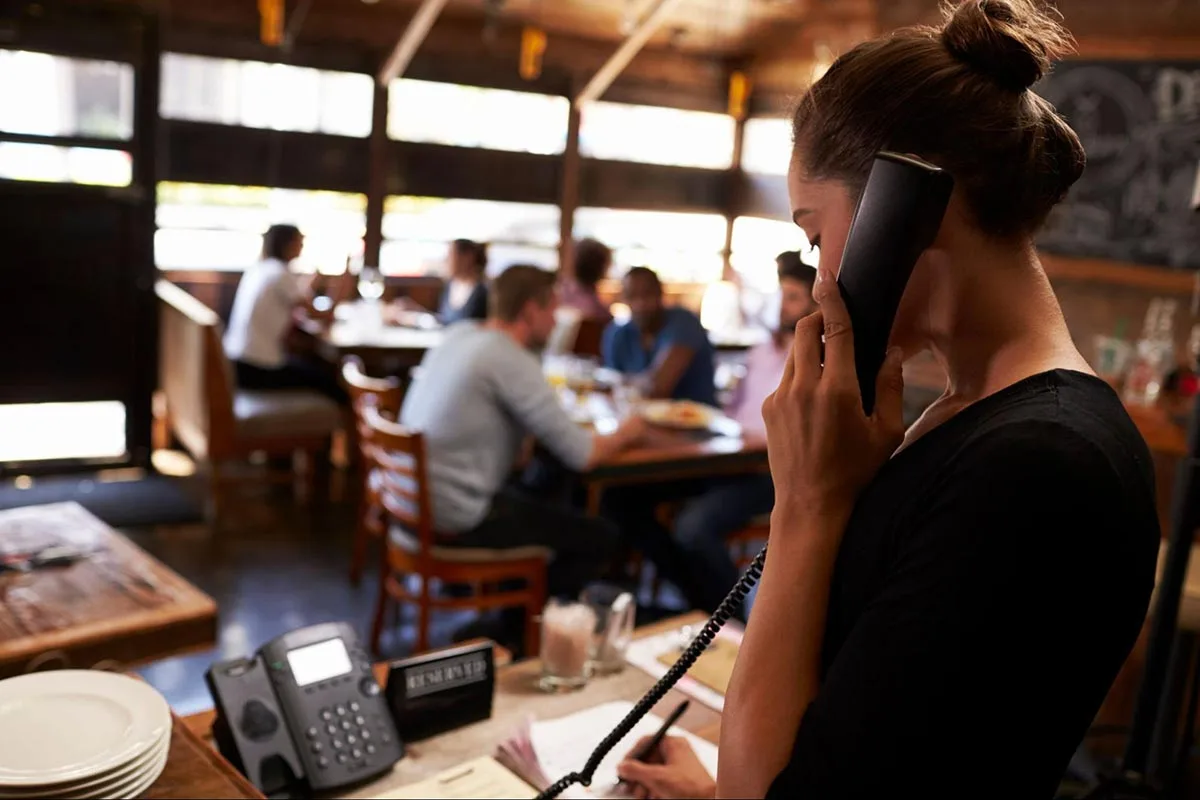

In short: restaurants miss most of their calls during peak service — exactly when callers have the strongest intent to book or order. Those calls never show up in any report, so the lost revenue stays invisible. An AI phone assistant answers every call instantly, handles reservations, hours, menu and delivery questions, and turns each conversation into data you can measure.
Restaurants measure almost everything.
Reservations. Orders. Table turnover. Average spend. Delivery performance. Customer reviews.
But one important customer channel stays surprisingly difficult to measure: the phone.
Every day, potential guests call restaurants to reserve tables, ask about opening hours, check menu options, inquire about delivery, change existing reservations, or get information before deciding where to eat.
These are not random interactions. In most cases, the person calling already intends to visit or order.
The problem is simple: when the restaurant is busy, the phone competes directly with the guests already standing in front of the team.
That creates a hidden operational and revenue problem.
Every unanswered call could be a lost customer
Picture your restaurant during peak dinner service.
Tables are full. Staff are moving constantly. The host is handling arriving guests. The kitchen is under pressure.
Then the phone rings.
Nobody answers.
From the restaurant's perspective, nothing obvious happened. No order was cancelled. No reservation disappeared from the system. No customer complained.
But the caller may have wanted a table for four.
They may have wanted to place an order.
They may simply have needed to know whether you were open.
When nobody answers, they can move on to another restaurant within seconds.
The restaurant loses revenue without ever knowing the opportunity existed.
That is what makes missed calls dangerous: you cannot recover revenue you never knew you lost.
Your staff should not have to choose between the phone and the guest
Phone calls create a second cost that is even harder to see.
Attention.
A host helping arriving guests may have to stop to answer:
- "Are you open tonight?"
- "Do you have parking?"
- "Can I reserve for six people?"
- "Do you have vegetarian options?"
- "Where are you located?"
- "Can I change my reservation?"
Individually, these questions are easy.
Collectively, they interrupt service dozens of times a night.
Every interruption pulls an employee's attention away from the dining room and toward the phone — and during peak hours, that attention is at its most valuable.
The goal of AI is not to remove hospitality from restaurants.
It is to remove unnecessary interruptions so restaurant teams can spend their attention where human hospitality actually matters.
Your restaurant's calls contain valuable customer data
Restaurant calls are not only requests.
They are information.
Suppose customers repeatedly ask:
- "Do you have vegan options?"
- "Can you host birthday dinners?"
- "Do you have outdoor seating?"
- "Can I reserve for a group of 12?"
- "Do you deliver to this area?"
Those questions reveal demand.
If conversations disappear the moment the call ends, operators lose real information about what customers want.
Over hundreds or thousands of calls, patterns emerge.
Maybe customers keep requesting reservations after your current closing time.
Maybe people frequently ask about an item that is not clearly explained on your menu.
Maybe large groups call far more often than you expected.
Maybe one specific day consistently generates more reservation inquiries than the rest.
That information can shape staffing, marketing, menus, opening hours and operations.
Your phone should not just ring.
It should teach you something about your business.
How an AI phone assistant answers restaurant calls
Hala AI gives restaurants an AI voice agent that answers customer calls automatically and turns those conversations into useful business information.
Instead of every call requiring a staff member to stop what they are doing, Hala handles the common interactions instantly.
Customers ask questions naturally. They do not navigate phone menus or press numbers to reach different departments.
They simply speak.
Hala helps restaurants handle interactions such as:
- Restaurant information and frequently asked questions
- Opening hours and location
- Menu questions
- Reservation inquiries and bookings
- Order-related questions
- Customer requests
- Routing the call to a person when human help is genuinely needed
And because those conversations happen digitally, restaurants gain something a traditional phone line almost never provides: visibility.
Know why customers are calling
Once phone conversations become measurable, operators can finally answer questions like:
- When do customers call most?
- What are they asking about?
- Which questions come up again and again?
- How many calls arrive during peak service?
- How many arrive outside operating hours?
- Which calls represent potential reservations or orders?
- Where are customers getting stuck?
Instead of relying on staff memory or intuition, you work from actual conversation data.
That turns the phone from an operational interruption into a source of business intelligence.
Capture demand even when your team is busy
The busiest restaurant hours are the worst possible time to answer the phone manually.
They are also some of the most valuable times to receive a call.
That is the contradiction. The more successful your restaurant is at a given moment, the less available your staff are to capture the next opportunity.
An AI assistant breaks that trade-off.
During busy periods, your team stays focused on service while calls still get answered.
When the restaurant is closed, callers still receive useful information instead of an unanswered line — the same problem hotels face with after-hours bookings.
When repetitive questions arrive, they get handled without interrupting anyone.
And when a conversation genuinely needs a person, it gets directed to one.
Consistency matters
Customers should not get a completely different experience depending on who happens to answer the phone.
One employee may know every menu detail. Another may be new. Someone may answer warmly at 3 PM and sound rushed during the 8 PM rush.
That is understandable. Restaurant staff are human, and service conditions change constantly.
An AI voice assistant adds a layer of consistency underneath that.
Hala is configured around your restaurant's real information, policies, services and frequently asked questions — so every caller hears the same accurate answer, and your team stays free for the moments where judgment and hospitality matter more.
Built for natural conversations, not phone menus
Traditional automated phone systems taught customers to dislike automation.
"Press 1 for reservations."
"Press 2 for opening hours."
"Press 3 to speak to someone."
Voice AI changes that interaction. Instead of navigating a menu, the customer just explains what they need.
A guest might say:
"I want to reserve a table for four tomorrow evening."
Or:
"Are you open Sunday, and do you have outdoor seating?"
The conversation happens naturally, in English or in the customer's own Arabic dialect.
For restaurants, that means automation stops being another barrier between the business and the customer. It becomes the fastest route to an answer.
Hospitality should stay human where it matters
AI should not replace the experience of being welcomed into a restaurant. It should protect it.
Your staff's attention is finite. Every minute spent repeating opening hours is a minute not spent greeting guests, solving problems, or improving service.
Hala handles the conversations that can be automated so your team can concentrate on the ones that should not be.
Turn your phone into a revenue channel you can measure
Restaurants have spent years improving websites, reservation systems, delivery platforms, POS systems and digital marketing.
The phone should not stay disconnected from that transformation.
With Hala AI, restaurant calls become structured, measurable and available around the clock.
Instead of wondering how many opportunities disappeared because nobody answered, you get visibility into real customer demand.
Instead of interrupting employees for the same questions, routine conversations get handled automatically.
Instead of letting customer questions vanish at the end of every call, conversations become business insight.
The phone stops being something that simply rings — and becomes a measurable customer and revenue channel.
FAQ
How many calls does a restaurant actually miss?
Most restaurants have no idea, and that is the core problem. Unanswered calls leave no trace in the POS or the reservation book, so they are never counted. The first thing an AI phone assistant delivers is simply the number: how many people called, when, and what they wanted.
Can an AI phone assistant take restaurant reservations?
Yes. Hala AI can capture reservation requests over the phone — date, time, party size, name and contact details — and pass them to your team or your booking workflow. It can also handle changes to existing reservations and answer availability questions.
Will customers know they are talking to an AI?
They will hear a natural conversation rather than a phone menu. Hala speaks conversationally, understands interruptions, and responds in the caller's language. Most restaurants choose to be transparent that the assistant is AI, which callers accept easily when the answers are fast and accurate.
Does an AI voice agent replace my host or hostess?
No. It removes the repetitive calls that pull your host away from arriving guests. Calls that need human judgment — a complaint, a large private event, a special request — get routed to a person. The point is to protect your team's attention, not to replace it.
Can it handle callers who speak Arabic?
Yes. Hala AI is built for the Lebanese and wider MENA market and handles real spoken dialects alongside English, not only formal Modern Standard Arabic. You can read more about why that distinction matters.
What happens when a caller needs a real person?
The conversation is escalated. Hala can transfer the call, capture the caller's details and reason for calling, and alert the right person on your team so nothing is dropped.
How much does it cost compared to hiring someone to answer the phone?
Considerably less than an additional full-time hire, and it covers every hour rather than one shift. We break the comparison down in Hala AI vs hiring a receptionist.
Stop letting valuable calls go unanswered
Your customers are already calling.
The question is whether your restaurant is ready to answer.
Book a demo and see how Hala AI handles your restaurant's calls — during service, after closing, and in your customers' own language.
Related articles